Key Takeaways:
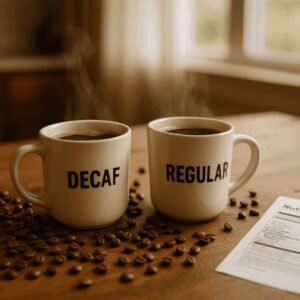
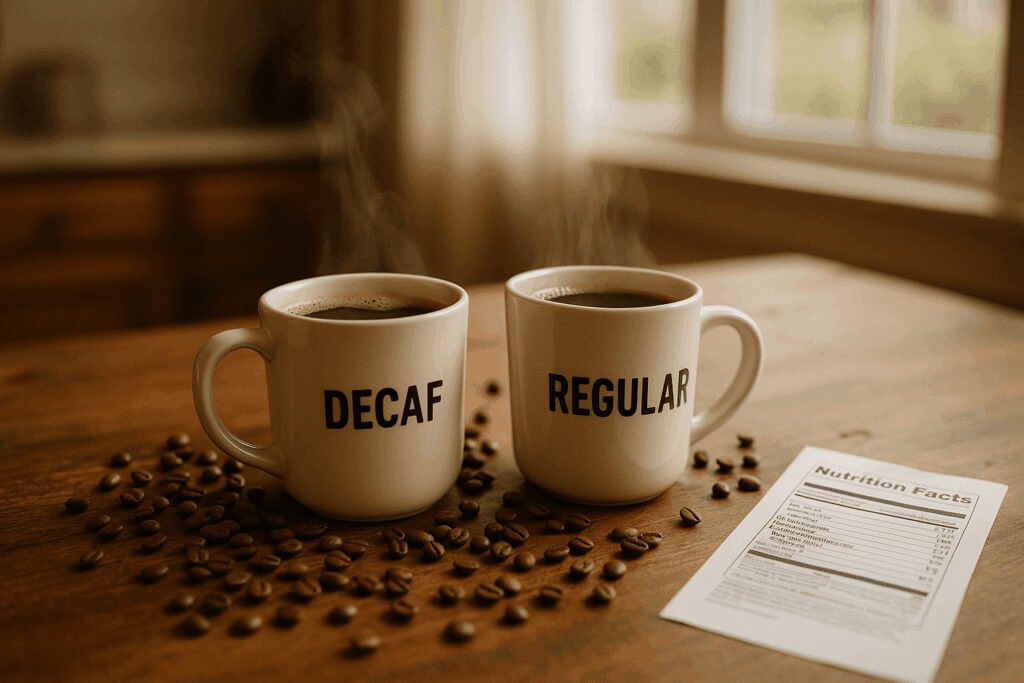
- Decaf isn’t caffeine-free, but has ~97% less caffeine than regular coffee.
- The decaffeination method matters—some use chemicals, others are natural.
- Health-conscious coffee lovers may benefit from decaf depending on sensitivity, sleep, or stress levels.
- The nutritional profile is nearly identical to regular coffee—minus most of the caffeine.
- Choose water-processed or CO2-decaf beans for the cleanest cup.
Introduction: The Buzz About Less Buzz
For many of us, coffee is a daily ritual—a comforting aroma, a social cue, and a mental jumpstart. But if you’ve ever considered switching to decaf, chances are you’ve asked yourself,
“Is decaf really healthier?”
As a coffee enthusiast and nutrition nerd, I’m here to break down the science and the myths so you can make an informed (and delicious) decision.
What is Decaf Coffee, Really?
Decaffeinated coffee starts as regular coffee beans, but goes through a process to remove most of the caffeine—usually around 97–99%.
Contrary to popular belief, decaf is not caffeine-free. An average 8oz cup of decaf contains about 2–5 mg of caffeine, compared to 80–100 mg in a standard cup of regular coffee.
How is Coffee Decaffeinated?
There are four main methods to decaffeinate coffee. Some are cleaner and safer than others:
1. Swiss Water Process (Best for Health)
- Uses water, temperature, and time.
- No chemicals involved.
- Preserves flavor well.
- Organic and ideal for sensitive drinkers.
2. CO2 Process
- Uses liquid CO2 to extract caffeine.
- Clean and effective, but more expensive.
- Common in commercial-grade decaf.
3. Methylene Chloride Process
- A chemical solvent removes caffeine.
- Trace amounts may remain.
- Approved by FDA but controversial for health-conscious consumers.
4. Ethyl Acetate Method
- Derived from fruit or synthetic sources.
- Marketed as “natural,” but still solvent-based.
Pro Tip: Look for decaf labeled “Swiss Water Process” or “CO2 Process” if health is a top priority.
Health Benefits of Choosing Decaf
While regular coffee offers antioxidants and brain-boosting perks, decaf can still deliver many of the same benefits—with less stress on your system.
Here’s where decaf might be the better choice:
1. Better Sleep
If caffeine affects your sleep quality, switching to decaf (especially after noon) can significantly improve your rest.
2. Lower Anxiety
Those sensitive to stimulants often find relief from jitteriness and heart palpitations when switching to decaf.
3. Heart Health
Studies show that decaf may lower LDL cholesterol and improve vascular function—potentially even more so than regular coffee.
4. Digestive Comfort
For people with acid reflux or IBS, decaf may reduce symptoms due to lower stimulation of gastric acid.
Nutritional Profile: What Stays and What Goes?
Good news! Decaf keeps nearly all the nutritional benefits of regular coffee:
| Nutrient/Compound | Regular Coffee | Decaf Coffee |
| Antioxidants (polyphenols) | High | High |
| Chlorogenic acid | Yes | Slightly reduced |
| Caffeine | 80–100 mg | 2–5 mg |
| Calories | ~2 per cup | ~2 per cup |
Is Decaf “Healthier”?
It depends on your personal needs.
If you:
- Struggle with insomnia, anxiety, or heartburn — decaf may be the healthier option.
- Want mental alertness, exercise performance, or fat oxidation — regular coffee has the edge.
The real game-changer is choosing high-quality decaf, processed safely.
How to Choose a Healthier Decaf
Here’s a quick checklist when buying decaf:
- Choose “Swiss Water Process” or “CO2 Process” beans
- Opt for single-origin or organic where possible
- Avoid blends with “natural” or “chemical” decaffeination unless labeled clearly
- Ask your local café (yes, even us at Rustle & Still) how their decaf is made!
Bottom Line
Decaf isn’t just for your caffeine-averse grandma anymore. Find out how much calories in coffee to help you keep sugar in check.
In today’s wellness-focused world, it’s a smart option for those seeking balance without sacrificing the café experience. When done right, decaf delivers all the warmth, richness, and ritual—minus the buzz.
So next time you’re in Rustle & Still, don’t hesitate to ask about our decaf. We make sure it’s clean, flavorful, and worthy of your favorite mug.
Ready to try a better decaf?
Visit us or order online—our house decaf is made with the Swiss Water Process and packed with bold Vietnamese flavor.